-->

Monday, February 25, 2013

Messaging.


Lawmakers are returning from their little needed and much less deserved rest.

If a national referendum were held today, Congress would be gone, and by a landslide.  It's approval-rating stands at 14%.  That's what makes the bizarre goings on in Washington as we approach March 1st so astounding.  Are these legislators that clueless, that delusional?  Do they really feel they have the upper hand against a president whose approval at 55% is at a three year high?  There is a long held truism that, while Congress may be unpopular in the abstract, voters approve of their own Representative.  Ah yes, Tip O'Neil's much-quoted aphorism that "all politics is local".  Perhaps, but I'd suggest that conventional wisdom in that regard, certainly the idea that "Congress is bad, but not my Representative" may be running its course.

Just consider a parallel truism.  While we may respond to a well-crafted proposition in theory, say advocating change or deficit reduction, we are far less enthusiastic when either of those touch us directly.  In today's context, it's one thing to cheer our Congressperson's rousing rhetoric about the need for spending cuts and deficit reduction.  It's quite another to experience flight delays, roads in disrepair, fewer teachers in the classroom or cops on the beat, national park closings or job furloughs that impact both the worker's family income and business that rely on her patronage.

Washington seems unable to craft bi-partisan accommodations and alliances, but  it seems clear that out in the real world Democrats, Republicans and Independents are of a mind when it comes to seeing Congress as dysfunctional.  Sure pundits and analysts may want to assign some or equal blame on the President for the sequester debacle.  But when he decries moving from one fabricated crisis to another, his words resonate.  This is not to say Americans don't blame Obama too — frustration has no bounds — but they blame him much less.  What really bothers us most about those on the Hill is that, while we are expected to do our job at work, no excuses, Congress is AWOL.  That's infuriating.  We are not paying them for gridlock but for performance.  And what we especially resent is being held hostage to the games they seem to playing.

Democrats, as has been noted in earlier posts, have been put to a distinct disadvantage in recent years by the Republicans' superior wordsmiths.  Consultants like Frank Lutz have been able to shape the public conversation by testing and then using language aimed at selling their clients' point of view.  Terms like "pro-life" were invented to put a positive spin opposing abortion.  Not only does it take ownership of "life", precious to us all, but also provides the halo, real or not, of being on high moral ground.  In contrast, while "pro-choice" may speak powerfully to both a woman's rights and the democratic way, it is vulnerable to being painted as a position with some degree of moral ambiguity, however distorted that may be. Or take branding inheritance levies as "death taxes", something that implies those who would impose them are heartless "grave robbers".  So effective message creation, the GOP specialty, has proved to be a huge winner.  But its very success may have unintended consequences, ones that may be coming back to bite those who have benefited so from its employment.  Among those is the notion that it's all about message.

Despite holding on to the House, Republicans suffered a significant defeat this past November.  Having had a flawed presidential candidate certainly contributed to their losses, a fact upon which many of them conveniently lean in explaining what went wrong.  Adding to that, George W. Bush, while having won two terms is now seen by historians as one of the worst presidents in history.  While judging a president so soon has considerable risks, the respected Siena College Research Institute study places W at 39th among the 43 chief executives.  Again, that may be premature, but we do know that rather than being the popular elder statesman Bill Clinton is for Democrats, Bush 43 has essentially been accorded non-person status.  It is one of the few things upon which all sides in his now deeply divided party seem to agree.  Of course, that blame can be assigned to Romney and Bush lets others off the hook.  It may also be misleading, sending exactly the wrong message, this time to the party that has been so good with messaging.

And it is the centrality of messaging (upon which they are relied so heavily and so successfully) that still seems to be uppermost in their minds.  Nothing illustrates that more than the decision to put forth Marc Rubio as their State of the Union evening face.  The Senator from Florida is handsome, young and Hispanic.  The latter of course is the most important since Obama captured 71% of Latino votes compared to Romney's 27%.  It was what George Bush would describe as "a drubbing".   So not only was Rubio cast as spokesman, he delivered his response in both Spanish and English.  Some people have gotten caught up in his awkward sip moment, but what struck me was the unaltered party line rhetoric, exactly the views that a majority of voters rejected just weeks earlier.  It was a tone-deaf message from an apparently tone-deaf party.

The President's victory may have been helped by the fact that Democrats seem to have been the messaging winners in 2012.  So apparently the GOP thinking goes: if only we can regain the word battle, we will recapture lost ground.  I don't think so.  The problem Republicans faced in the recent election wasn't a slogan deficit, but a policy deficit.  Without discounting their huge successes over the past decade, most especially at the state level and still being felt, public opinion is shifting in America.  Voters aren't aging, they are getting younger and historic demographics are not solidifying they are being diluted by more diversity.  Just take our views on Marriage Equality.  Today 54% of Americans favor approval of same-sex unions while 39% are opposed.  That is a complete reversal of the 37% (for) to 54% (against) poll results of 2009, just one election cycle ago. 

Republicans don't have a messaging problem. They have a content problem.   Obama didn't win in 2012 just because Democrats talked more effectively or had a vastly superior ground operation.  They had both, but in a campaign that actually did touch on underlying issues and philosophies voters chose between substantive differences.  For example, far from discounting the safety net's importance, today's younger and more diverse voters understand how critical it is to their present and future.  The children of the very voters upon whom the GOP counted are burdened with debt.  Instead of heading for surefire success, one that even equals that of their parents, they are faced with the prospect of modest and stagnant wages, of long waits to get employment.  Hispanics like other minorities still face an even harder road ahead.  I laugh in hearing that illegal immigrants will have to go to the end of the waiting line to gain citizenship.  Isn't that where they (along with their legal sisters and brothers) already are and have always been?  Slogans will not resonate with any of this newer generation of voters.  They're much to life experienced for that, they know the score.  They want substance not clever messaging.

So members of Congress may continue to play their games in the days ahead. Republican gurus will likely continue looking for the next winning catch phrase.  Along the way, we will all just get more frustrated, will likely have to bare unnecessary pain.  But, in my view at least, the games can't last and the slogans have run their course.  That's not saying all will be better with an aspirin and a good night's sleep, but I get the feeling time is beginning to be on our side. 

Thursday, February 21, 2013

Depositon


A surely unwelcome thing happened to New York's Cardinal Timothy Dolan while preparing to depart for Rome where he and 116 colleagues will crown a new pope.  He was deposed by lawyers representing victims of priestly sexual abuse in Milwaukee where he had previously served as archbishop.  The story here is now all too familiar, one that has played out across the country and indeed around the world.  As the deposing attorney Jeff Anderson put it, “The deposition of Cardinal Dolan is necessary to show that there’s been a longstanding pattern and practice to keep secrets and keep the survivors from knowing that there had been a fraud committed”.  Also being deposed before his departure in a separate case is Cardinal Roger M. Mahony of Los Angeles. 

These depositions represent different cases and there is reason to believe (based on files recently made public) that Mahony may have much more for which to answer than Dolan.  Indeed there are demands for him to abstain from participating in the papal conclave altogether.  And of course not only these two prelates, but Pope Benedict himself have been under somewhat of a cloud regarding both the abuses themselves and the Church's unmistakably systematic cover up aimed to protecting its reputation.  However unwelcome the timing of these depositions may be, they are a sharp reminder of why, despite a billion plus membership, a new pope will face huge challenges.  In Dolan's case, the deposition may also put an end to any hopes he might have had in succeeding to the papacy, though that probably was highly unlikely from the start.

Priests and other clergy often portray their ministry as having been initiated by God — they were "called".  That's a pretty substantial claim, regardless of the circumstances.  But when you see a significant number of "called" clergy (across religions) committing criminal or immoral acts, it shouldn't be unexpected that people's faith in things religious are undermined.  How could God call such people into service?  Think of how the parishioners of Msgr. Kevin Wallin a charismatic priest who, among other things, turned out to be both a drug user and dealer must feel not only about him but also about their faith.  Why do you think worship attendance is down these days?

Suzanne DeChillo/The New York Times
In a poignant Les Miserables lyric, Marius, looking out at an old haunt, observes:
Empty chairs at empty tables 
Where my friends will meet no more
That's exactly what many of the still faithful must be feeling as they look around at the empty pews where their friends and often family just don't meet any more.  In so many cases, and certainly for the Church that will shortly elect a new leader, this is largely the result of a self-inflicted wound.  When we see leaders who invoke their "call" and ask their congregation's trust behaving poorly, our doubts are magnified.  And that is particularly problematic for religion because doubt can be its worst enemy.  The Cardinals will gather with pomp and circumstance in the weeks ahead, but they will do so under a cloud of doubt.  Each and everyone of them will be figuratively deposed as many of the onlookers silently ask the classic question, "what did you know and when did you know it?"  

Benedict and John Paul stacked the deck with a group of conservative cardinals insuring, they hoped, continuity.  Their particular take on Catholicism and religion is likely to prevail for some time to come.  But they have also locked in a group of leaders many of whom have played some role in the priestly abuse scandal and subsequent cover-up that has challenged the institution's credibility.  Where an insular buddy hierarchy is at play, one that has neither checks and balances nor membership accountability, it is very hard, if not impossible, to clean house.  And clean house is probably what is needed.  Having two of its highly visible American Cardinals being deposed on the eve of the vote is bad enough, but it merely a symbol, not the root, of the problem.  Symbolism, the new pope will find, is the least of it.

Monday, February 18, 2013

Dear Abbey.


Time to bid another farewell but not a goodbye to the Grantham’s and Downton. They'll be back for yet another season.  When season three began, 7.9 million viewers tuned in, a record for PBS.  The Brits have delivered for us again.  Of course, its pedigree and prestigious American address notwithstanding, Downton Abbey is a classic soap opera.  There are definitely times when one thinks, "Can’t believe I'm watching this".  And of course Downton is not only a soap opera but a derivative one at that.  Each episode builds on the tone and themes, if not storyline, established in BBC's 1970s Upstairs Downstairs, also shown here on PBS.  That saga's smaller but also grand 165 Eaton Place has been "reopened" with new owners in an updated version — 9 new episodes so far — clearly aimed to piggyback on its emulator's success.  It's all rather incestuous, wouldn't you say?

What is it exactly that has gotten so many of us hooked on the Grantham family and their cohabiting servants?  For one, the story is well spun; for another it is very well acted.  Yes the residents of Downton live in a vastly different world than our own, but ultimately these are human beings with aspirations and characteristics that transcend any given time, place or class.  Moreover, we're watching a series that has sufficient airtime to allow for character development and, not inconsequentially, neither our train of thought nor theirs is interrupted by commercial messages.  Ah the joys of public TV.  If you're not sending in your yearly support, shame on you.  The absence of commercial interruption is equally appreciated by viewers of HBO created series and most recently of Netflix's excellent House of Cards.

The Downton characters are developing and we, as is the case in any well-told story, are both engrossed and invested in them.  We're rooting for the still unfulfilled hopes evident both upstairs and down.  We could not help but be moved by the untimely loss of Sybil, in many ways the most courageous and interesting of the Grantham sisters.  We wait with bated breath to see the impact next time around of what's happened to Mathew, Downton's great young hope.  And while alas few of us have a figure like Dame Maggie Smith in our own families, we so wish we had one of her ilk around if only to observe the show of it.

Okay, Downton is good TV, but again what makes it so compelling?  For me the real pull of the show is the underlying theme that runs through, the fundamental question that is both timely and timeless.  Right there on display is the tension filled struggle between past and future.  It is a struggle that makes at times for a very awkward present.  It rings so true because we both know and live it.  Issues of class play at Downton much as they do in our own day.  But let's not be simplistic about it.  Holding on to yesterday, then and now, is something found across the economic strata.  Clearly, the tug of war within the Grantham' family has its mirror image in Carson's realm and in both cases it is mostly generational.  That said, age and generation is not always as decisive a factor as mindset — older people can be very progressive, young ultra-conservative.

Looking at our own social and political landscape, our Dear Abbey if you will, there may be no more fundamental issue at hand than past vs. future.  There is also nothing more ferocious than an aging animal (physically or mentally) faced with being supplanted by a vigorous forward thinking youth.  That's especially true when the pretender has a different look, background or way.  The Downton syndrome plays out before us today as people of waning power and yesterday's ideology face, for example, a president who doesn't look or talk like them.  Tomorrow-focused people may show respect, but tend not to accept what is or has been as a given.  They question and they ultimately demand change.  Lord Grantham is unnerved by both.  He sees the quality of his performance challenged and his hold on the reigns undermined.  Isn't that what all change is about and why is so resisted? Passing the baton is always painful, at the very least bittersweet.

It was only days ago that Pope Benedict announced, relative to the Church we know, his unprecedented abdication.  It sent shock waves around the world and only now are the Catholics and others beginning to focus on the ideological fallout.  Among the principal issues his move raises is the nature of the papacy itself, most especially the notion of infallibility.  Remember popes aren't merely absolute monarchs they are also seen as God's infallible representative here on earth.  It gives them truly extraordinary powers.  Leaving aside celibacy and the absence of family life in the traditional sense, there is a strong element of Downton in the Roman Church.  It is an archaic Downton bound by traditions of the past — in large measure still living in the past — with still vast but no longer totally secure resources.  

To be sure Rome is being challenged by its immediate and still unresolved scandals, to be charitable moral lapses.  But the real issue they and, while differently, other traditional religious groups face is how to bridge what was with what must be if they are to sustain.  Their problem, and make no mistake equally ours, is how to let go and move on.  Easier said than done especially when so many, perhaps a huge majority, are mired in or, perhaps lest judgmentally, reverent of what for so long was.  When your arteries are clogging up with very tasty butter rich fare, it's hard to embrace a much altered diet.  Very tough but in the end your survival depends on it. 

We all know Lord and Lady Grantham.  We know their children and perhaps mostly we know the world down below, the one with the greatest stake in change and moving forward.  Downton's world may still be in the early twentieth century but it translates fluidly in the twenty-first.  We're all living it at this moment.
_____________________
My book Transcenders: Living beyond religion and the religion wars is now available in print and as an eBook.  Both versions are available at Amazon; the electronic iBooks version can be found at iTunes; a Nook version at Barnes & Noble.

Wednesday, February 13, 2013

Abdication


When something hasn't happened in nearly 600 years, and also only four times throughout history, it's very big news.  Not surprisingly the unexpected abdication of Pope Benedict XVI scheduled for month's end has been accorded headline coverage worldwide.  Of course, not being a Catholic, I look at the events in Rome with some distance, though not without great interest.  Funny thing is that one of my first thoughts was not so much about what the princes who surround Benedict were thinking but what thought may have come into England's Prince Charles's mind.   Here is a pope at 85 throwing in the towel after only eight years in office and doing so because of advanced age.  In contrast, just a few days earlier Queen Elizabeth, age 86, celebrated the 60th anniversary of her ascent to the throne of St. James.  My suggestion, Crown Prince in waiting, don't hold your breath.  As to the princes of the Church, well it's open season again — another conclave, another shot at the big prize.

The vote that takes place in Rome will hardly be a democratic free for all.  To start, while there are more than one billion Catholics worldwide, only 118 men, all of whom have been appointed by Benedict and his predecessor, will have a say in the matter.  They will not be of the people, but by the monarch. To be sure there will be politics at play when the elector Cardinals gather, but it is a kind of contained politics more akin to say the Chinese Politburo than what we know as citizens in a democracy.  Like in China, this is a one party system and a buddy system at that.  What's different of course is that while a Chinese party head leads a collective and must answer to his colleagues, popes are absolute and infallible rulers.  They answer only to God.  How exactly that works, I don't really know, but let's take it at face value.

Just as Prince Charles shouldn't hold his breath waiting for his beloved Mum to step aside, we — non-Catholics and Catholics — shouldn't expect a major departure from current Vatican policy.  Such departures haven't happened often, John XIII being the notable exception, and with good reason.   While there is a backbench from which to select potential princes of the Church, popes tend to elevate from a pool of the like-minded and that has been especially true with the men who put all the current College of Cardinals in place. Their appointees are decidedly conservative men who, if Benedict is any indication, see themselves as protectors of long established tradition (the past) rather than shepherds of the future.  Benedict has no tolerance for "cafeteria religion" or reforms.   The new pontiff, replacing one who says he's too old and tired to move forward, is likely to be a study in stylistic rather than substantive change.  Remember, these are a group of men who have largely rejected even the slim light let into their window by Vatican II, which many of them have actively sought to subvert.

Not only is Benedict's successor unlikely to turn the corner on an all male clergy, birth control, gays or stem cell research, I'd guess that a younger more vigorous Bishop of Rome might be all the more assertive about holding the line.  At a time when large numbers of Catholics have left the Church, especially in Western countries, modern day popes and their appointed princes seem to be turning their backs on any kind of dissent.  To be sure there are large numbers of loyal rank and file Catholics who would welcome change, who yearn for it, but they have no say in the matter.  The Church is an autocracy, the Pope its absolute monarch.

There has already been substantial comment and analysis accompanying Benedict's decision.  John Patrick Shanley, author of the powerful play Doubt, penned an op-ed entitled, Farewell to an Uninspiring Pope.  I think "good riddance" better expresses his views.  What struck me about the Times' opinion pieces was how many of its star columnists were brought up in the Church, products of parochial education, and to varying degrees have left it and probably religion behind.  I don't want to extrapolate here and suggest that, of course, well-educated and sophisticated writers could never hold on to the Roman Church's conservative teachings.  Yes both Bill Keller and Frank Bruni who wrote pieces might well be defined as "lapsed" but Ross Douthat most certainly can't be put in that camp.

Douthat is the paper's most authentic conservative — David Brooks is less consistent — and a still young man who always writes with enormous intelligence.  I usually disagree with him, but am always stimulated by and benefit from the read.  It is Douthat's attachment to Church and its teachings that made his thoughts on the abdication more interesting than any of the others.  In his blog entitled, The Pope Abdicates, Douthat speaks of the short-term generosity of Benedict's decision.  He sees this in the context of the fact that,
“globetrotting face of Catholicism” and “media-savvy C.E.O. of a controversial brand” have been added to the theological and administrative obligations inherent in the office, the burdens of age are arguably more of an impediment to papal effectiveness than ever before, and the mix of stasis and confusion created by a pontiff’s slow decline can have more immediately disastrous effects than they might have had in an era when papal incapacity could be a Roman secret rather than a global spectacle.

Carol Williams in a LA Times piece also speaks of the Pope's "generous act", one that she suggests could transform the Vatican.  Echoing Douthat and others she writes, "A pope today runs a massive, global operation, not unlike a multinational corporation. He is expected to travel to the faith’s far-flung congregations and craft important doctrinal policy and teachings."  She suggests that this move might herald a fundamental change in how the Church operates.  It may open the way for future papal abdications, perhaps even the consideration of mandatory retirelment at 75 much like that of Cardinals.  It is just such thinking that troubles Ross Douthat and which is the bottom line of his blog.  In his view the benefits of the current pope's retirement:
...need to be balanced against the longer term difficulties that this precedent creates for the papacy’s role within the church. There is great symbolic significance in the fact that popes die rather than resign: It’s a reminder that the pontiff is supposed to be a spiritual father more than a chief executive (presidents leave office, but your parents are your parents till they die), a sign of absolute papal surrender to the divine will (after all, if God wants a new pope, He’ll get one), and a illustration of the theological point that the church is still supposed to be the church even when its human leadership isn’t at fighting trim, whether physically or intellectually or (for that matter) morally.

Williams points to the logical implications of the Pope's abdication, of its potential for leading the Church into the twenty-first century world.  Douthat speaks of its danger, but more important reflects the dilemma facing religious leaders in our time in and out of the Roman Church.  Like many of the faithful, he has been pointedly critical of the contemporary Church's shortcomings but his underlying view is in sync with its leadership.  However logical change may be, it is threatening to what followers have been taught to consider an eternal faith.  The problem is that much of what has been considered eternal is being challenged by what we now know.  Part of that knowledge is that far from being infallible, popes and other church leaders are mere mortals whose vision is as limited as our own.  They may talk of protecting tradition, but so often and so transparently they are protecting their own interests.  Being among the chosen 118 or ultimately being declared the infallible absolute monarch is, Benedict's move notwithstanding, hard to give up.

Much attention will be paid to the selection of a new pope in the weeks to come.  The drama associated with a conclave, the anticipated white smoke and the pomp, not to mention the theatrics, of the ceremonials are alluring.  We have the same fascination with the British monarchy and for some of the same reasons.  But theater, which is exactly what it has become for a growing number of us including those brought up as Catholics, has its limits.  Church leaders across many faiths are so often talking to themselves, exactly when one would hope they are talking to us, reflecting who we are rather than the vested interests they might have.  Ross Douthat is right.  There is danger in Benedict's generosity, but the implications of that danger have long since passed.  Recognized or not, we are in a different place and changing that will ultimately prove more challenging than preserving the past.
_____________________
My book Transcenders: Living beyond religion and the religion wars is now available in print and as an eBook.  Both versions are available at Amazon; the electronic iBooks version can be found at iTunes; a Nook version at Barnes & Noble.

Monday, February 11, 2013

Way beyond drones.


The late philosopher Philippa Foot first posed her classic trolley problem back in 1978. While there have been refinements since, the aim remains to test our moral judgment.  To that end, some version of two hypothetical are offered for consideration.  In this one, a trolley car is speeding down the tracks, its driver having lost control of the brakes.  A short distance away, five workers are standing on those tracks totally oblivious to the impending danger.  If you do nothing, they will all be killed.  But you happen to be standing next to a lever that would divert the trolley to an alternate track.  There is one worker standing on the new path who will surely die if you pull the lever, but five others would be spared.  Is it okay to pull the lever?  Alternatively, the runaway trolley is speeding towards the same five workers, but this time you happen to be on a bridge above the track, standing behind a very hefty stranger.  You calculate that if you push him off the bridge, the trolley will be derailed by his size.  He’ll die, but five will be saved.  Is it okay to push him?

I cite the trolley problem in my Transcenders' chapter on morality.  Exposed to its inherent moral dilemma, respondents in countless research studies invariably opt for the lever over the push — extrapolating to the present they prefer drones to boots on the ground.  To say the least, this is not a happy choice; only that taking one life rather than five seems preferable.  What's revealing, and perhaps equally important, is that it appears we'd rather not be directly engaged.  Pushing a person requires physical contact.  I point out in my chapter that the now much discredited Donald Rumsfeld clearly understood our citizen psyche when he pushed hard for more mechanized warfare.  Shock and Awe was a crude approach to that.  Of course, keeping boots off the ground (that was the plan) even with targeted bombing still cost untold innocent Iraqi lives.  Drones with their claimed precise and more contained destruction may offer something else, but let's not kid ourselves.  They too can cause collateral damage and at a heavy human cost.

Bush and Rumsfeld also mandated that Americans not be exposed to coffins landing in Andrews.  For obvious reasons, they didn't want us to see the losses of a controversial and misbegotten war that was not going as "planned".  And, truth be told, many of us didn't want to know.  The old hear no evil, see evil, and speak no evil monkey's heart still beats strong.  That accounts in part for the fact that there were so few protests against recent conflicts, something I've discussed in earlier posts.  Just as enhanced interrogation is a very dubious way of gaining useful information, so too is solving problems by the sword.  We may rail against the former saying it's wrong, immoral if you will, but we acquiesce to the second as a necessary evil.  And in that we'd rather pull levers than push someone over the bridge.

So drones and the guided missiles before them fit well into both a time when technology makes them possible and our national mindset.  We increasingly want to keep our distance from the conflict.  It's so much easier to write a letter to the editor, not to mention post a blog, then to stand in the midst of the fray.  Congressman John Lewis got bloodied marching across the Edmund Pettus Bridge in 1965; in 2013 we'd rather fire off a tweet.  Drones came to the fore this past week during John O. Brennan's CIA director confirmation hearings.  That didn't reflect widespread citizen outcry against this latest mode of warfare.  Rather Senators seemed to be concerned most that they were out of the loop.  To be sure a few expressed concerns that transcended that, but one had the sense that some on the committee were using the issue of targeting American Citizens abroad as a smoke screen to hide a more political agenda.

There seems little doubt that how and when we use this new form of military hardware needs far more scrutiny than we have thus far given it.  We remain locked in a war on terrorism mindset (even if that designation has been abandoned) just as for years we were locked into a Cold War one at an earlier time.  Setting up an overarching enemy may be justified by real threats, but it also allows for over reach and an abandonment of core principles.  Peter Baker wrote in the Times just days ago about the similarities (and some differences) between Obama and Bush approaches to combating terrorism.  Altogether, while the President did conclude the Iraq conflict and is on a similar path in Afghanistan, the general consistency of policy illustrates how difficult it is for leaders of large powers once in office to turn corners; to bring about real change.

It is naive to think that great powers like ours will be able to function in the world without employing force.  We didn't get to where we are without it, and we the people have always been both beneficiaries and enablers of aggressive policies and actions.  For years we deplored the close relationships between our leaders in both parties with Middle East Oil despots while at the same time happily purchasing gas-guzzling automobiles.  We speak of due process but were all relieved that our Special Forces team took out Osama bin Laden.  After all, due process is messy and its outcome uncertain.  Sometimes it isn't only that we prefer pulling the lever, we don't even want to sit on the jury.

Having just been through another election cycle, probably the most expensive in American history, many of us are deeply concerned about the overwhelming role of money in our politics.  As a good friend says, we have the best government that money can buy.  I share that concern but actually believe that in equal measure we have the government that we deserve.  These remain hard economic times when many Americans can't find a job or where our kids are looking forward to a life-long burden of education debt.  Just getting through each day is a struggle.  At the same time, if we're honest about it, most of us are happy just going with the flow.  Moral issues raised by drones and the like may evoke some private concern — outrage would be over stating it — but that's about it.  Dinner talk.  The trolley is coming down the tracks.  Thankfully someone else is there to pull the lever because even that much engagement is too much for us.

_____________________
My book Transcenders: Living beyond religion and the religion wars is now available in print and as an eBook.  Both versions are available at Amazon; the electronic iBooks version can be found at iTunes; a Nook version at Barnes & Noble.

Monday, February 4, 2013

Absent at the Cathedral.


As did Franklin Roosevelt and most presidents since, Barack Obama took his seat alongside Michelle and the Biden’s in the first row of the National Cathedral for the Inaugural Prayer Service.  Participating this year in what is now an interfaith event were religious leaders from Catholic, Protestant, Jewish, Muslim and Sikh communities.  Kansas City’s Adam Hamilton, pastor of one of the nation’s largest religious congregations, delivered the sermon.  Absent in the Cathedral was anyone representing the 20% of Americans who live without religion.  As noted in previous posts, this group stands second only to Christians in the "religious landscape" and is larger than all other faiths combined. 

Of course, those of who have left religion behind would have found no place in a religious service.  Even were that not so, who would represent them?  The people that researchers call "nones" and I call transcenders have in large measure left the organization called religion as much, and sometimes more so, as its belief system.  There may be some attempts to organize and lead them, but for the most part transcenders consciously opt for living without an organized community.  In some respects they reflect a wider disillusionment with institutions, both social and political. 

But taking this independent and leaderless stance presents a conundrum for individuals living in what remains a highly organized society.  Leaders give voice to people and communities of likes or the likeminded, especially when they are large are hard to ignore.  The women's, civil rights and LGBT movements testify to that.  Twenty percent is a huge number; about three times the population of our ten largest cities combined, six times larger than our tenth largest state, North Carolina, where I live.  Even so, transcenders' interests and points of view go unrepresented.  While that may be by design, it does leave them at somewhat of a disadvantage.

One of the most notable and heartening aspects of this year's inaugural (see earlier posts) was that President Obama accorded long overdue recognition to the gay community, perhaps most powerfully in coupling their struggle with that of women and African Americans.  In what is the run up to an expected Supreme Court decision on marriage equality that mention was of special significance.  What the president did not do this time around, however, was to give the nod he accorded four years earlier to "nonbelievers".  "We are a nation", he said then, "of Christians and Muslims, Jews and Hindus, and nonbelievers".  At long last openly gay citizens are taking their place in the Halls of Congress and Christine Quinn may well be elected Mayor of New York in November.  But being an avowed atheist or even an admitted unaffiliated transcender remains problematic in this "religious country".

Considering that 20% of us have left religion behind, it stands to reason that a substantial number of people in public life have done so as well.  Among them are certainly women and men who are forced, if only to keep up appearances, attend religious worship services in their home districts, cities or states.  It's a sham of political expediency.  Whether they are being hypocritical or simply bowing to a pro-forma reality and out of respect for constituents makes little difference.  I accept that they are victims of the system much in the same way as elected officials find it necessary to hold back on some of their inner most personal beliefs.  I don't blame them, but do bemoan a state of affairs where the beliefs of transcenders are not accorded the same value and respect as those of the religious.  Why do we demand that our presidents are churchgoers and that they openly profess their god-belief?  Does it really matter or have anything to do with qualifications for the job or competence?  I don't think so.  To suggest that the religious are more moral and trustworthy than transcenders, for example, is factually incorrect.  Convicted influence peddler Jack Abramoff boasted of his religiosity and President Bush told an audience that Enron's soon to be discredited Ken Lay was a man "whose guidebook for entrepreneurship to help others is the Bible”.  Moreover, any such notion of inferiority or deficiency is demeaning to those who may live without religion but are guided by an equally powerful and defining moral compass as those who live with it.

There is no question but that the majority of Americans identify with a religion and Pew researchers say even a large number of "nones" claim to believe in God or some higher power.  We all cherish the notion of equality and rights embodied in the "endowed by our Creator" phrase written into our founding documents.  The incorporation and assumption of God into public speech is so ubiquitous that we have come to accept it without question.  The President and other public officials invoke God's blessing on us; the legal tender we use to pay for goods and services offers the credential, "In God we trust". 

This is not likely to change any time soon, nor am I suggesting it should.  Invocations of God are meaningful to many Americans who ground their lives in religion.  What I am suggesting is that as the numbers of those who have left religion behind grows — and consequentially religion declines — people in high places and we as citizens should give more thought to how we incorporate religious-speak into the fabric of a secular society. 

Barney Frank could not have been elected to Congress had he "come out" while first running for the House in 1980.  Tammy Baldwin who was elected to the Senate in 2012 did not have to hide who she was.  Transcenders who want to win elections and serve in high office still must keep their orientation and beliefs to themselves.  In large measure they have to remain in the closet.  With a changing landscape and in the twenty-first century, there is clearly something wrong with that picture.  Barack Obama went to the Cathedral to pray, some future chief executive may want skip or alter that event.   Hopefully even Americans who don't share her beliefs will be respectful and generous enough to accept that change.

-->
___________________
My book Transcenders: Living beyond religion and the religion wars is now available in print and as an eBook.  Both versions are available at Amazon; the electronic iBooks version can be found at iTunes; a  Nook version at Barnes & Noble.


Friday, February 1, 2013

Echoes of McCarthy


Of course AIPAC is a Jewish lobby.  If it were an Israeli lobby it would surely have to be registered as a foreign agent under FARA.   It is not.   AIPAC's counterpart — yes there is an alternative point of view on supporting Israel — is called J Street not "I Street".   Listening to Chuck Hagel's critics one would think that calling a group "Jewish" is a pejorative.  Perhaps that's how this particular group of right wing senators sees it, but it's a gross misreading.  Jews carry the designation with pride.  In the United States it's possible to have a Jewish lobby, just as it is a civil rights lobby, a LGBT lobby, a business lobby, or yes a gun lobby.  That's a good thing.

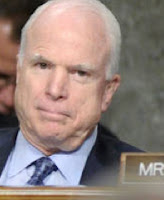
Listening to Hagel's confirmation hearing, certainly his questioning by Republicans, one might have thought that support for Israel was the principal job of a US Defense Secretary.  Leaving aside that the kind of support envisioned by these interrogators had a neo-Con, and in some cases an evangelical tilt, as an American Jew I found it perplexing.  But that was really an aside because the tone of the hearing had the unmistakable echo of ones conducted by the late Senator Joseph McCarthy.  The "Jewish lobby" and support of Israel came off as convenient rhetorical tools in carrying out their clearly coordinated agenda.  And the tone of the questions, perhaps none more than those posed by John McCain — just answer yes or no — brought me back to the 1950s.

It seems that Republicans have decided that McCarthy like smearing of a candidate is the way to go.  They started with Susan Rice, whose appointment as Secretary of State was still born thanks to this kind of guilt by association.  She had no role in, or responsibility for, the ben Ghazi tragedy.   They held back on John Kerry (the onetime victim of swift boating) probably because they saw his senate seat as a potential win-back.  And Hagel is being tarred not for his views on Israel which are probably shared by many in the Jewish community, but because they view him as an apostate.   Independent thinkers are the last thing that today's Republicans want or will tolerate.  Expect the Hagel confirmation votes in committee and on the floor to be strictly along party lines.

McCain of course has very personal reasons to dislike Chuck Hagel.  A strong supporter of America's ill conceived war in Iraq, the Arizona senator felt betrayed when Hagel opposed the surge and turned against the conflict.  Worse was when, now out of office, he supported Obama in 2008.  McCain's opposition has nothing to do with Hagel's qualifications for Defense; it is purely political and mostly very personal.  It is yet another reason to be thankful than this angry old man never reached the White House.

What the Republicans robbed us of with their McCarthy-like questioning was any substantive discussion of Defense's role or what its priorities should be in the years ahead.   I don't mean that the hearing totally ignored its underlying purpose, but that substance was drowned out by the noise of distraction.  Oh, would old Joe have been proud.  Oh, should McCain and company be ashamed.