-->

Wednesday, February 13, 2013

Abdication


When something hasn't happened in nearly 600 years, and also only four times throughout history, it's very big news.  Not surprisingly the unexpected abdication of Pope Benedict XVI scheduled for month's end has been accorded headline coverage worldwide.  Of course, not being a Catholic, I look at the events in Rome with some distance, though not without great interest.  Funny thing is that one of my first thoughts was not so much about what the princes who surround Benedict were thinking but what thought may have come into England's Prince Charles's mind.   Here is a pope at 85 throwing in the towel after only eight years in office and doing so because of advanced age.  In contrast, just a few days earlier Queen Elizabeth, age 86, celebrated the 60th anniversary of her ascent to the throne of St. James.  My suggestion, Crown Prince in waiting, don't hold your breath.  As to the princes of the Church, well it's open season again — another conclave, another shot at the big prize.

The vote that takes place in Rome will hardly be a democratic free for all.  To start, while there are more than one billion Catholics worldwide, only 118 men, all of whom have been appointed by Benedict and his predecessor, will have a say in the matter.  They will not be of the people, but by the monarch. To be sure there will be politics at play when the elector Cardinals gather, but it is a kind of contained politics more akin to say the Chinese Politburo than what we know as citizens in a democracy.  Like in China, this is a one party system and a buddy system at that.  What's different of course is that while a Chinese party head leads a collective and must answer to his colleagues, popes are absolute and infallible rulers.  They answer only to God.  How exactly that works, I don't really know, but let's take it at face value.

Just as Prince Charles shouldn't hold his breath waiting for his beloved Mum to step aside, we — non-Catholics and Catholics — shouldn't expect a major departure from current Vatican policy.  Such departures haven't happened often, John XIII being the notable exception, and with good reason.   While there is a backbench from which to select potential princes of the Church, popes tend to elevate from a pool of the like-minded and that has been especially true with the men who put all the current College of Cardinals in place. Their appointees are decidedly conservative men who, if Benedict is any indication, see themselves as protectors of long established tradition (the past) rather than shepherds of the future.  Benedict has no tolerance for "cafeteria religion" or reforms.   The new pontiff, replacing one who says he's too old and tired to move forward, is likely to be a study in stylistic rather than substantive change.  Remember, these are a group of men who have largely rejected even the slim light let into their window by Vatican II, which many of them have actively sought to subvert.

Not only is Benedict's successor unlikely to turn the corner on an all male clergy, birth control, gays or stem cell research, I'd guess that a younger more vigorous Bishop of Rome might be all the more assertive about holding the line.  At a time when large numbers of Catholics have left the Church, especially in Western countries, modern day popes and their appointed princes seem to be turning their backs on any kind of dissent.  To be sure there are large numbers of loyal rank and file Catholics who would welcome change, who yearn for it, but they have no say in the matter.  The Church is an autocracy, the Pope its absolute monarch.

There has already been substantial comment and analysis accompanying Benedict's decision.  John Patrick Shanley, author of the powerful play Doubt, penned an op-ed entitled, Farewell to an Uninspiring Pope.  I think "good riddance" better expresses his views.  What struck me about the Times' opinion pieces was how many of its star columnists were brought up in the Church, products of parochial education, and to varying degrees have left it and probably religion behind.  I don't want to extrapolate here and suggest that, of course, well-educated and sophisticated writers could never hold on to the Roman Church's conservative teachings.  Yes both Bill Keller and Frank Bruni who wrote pieces might well be defined as "lapsed" but Ross Douthat most certainly can't be put in that camp.

Douthat is the paper's most authentic conservative — David Brooks is less consistent — and a still young man who always writes with enormous intelligence.  I usually disagree with him, but am always stimulated by and benefit from the read.  It is Douthat's attachment to Church and its teachings that made his thoughts on the abdication more interesting than any of the others.  In his blog entitled, The Pope Abdicates, Douthat speaks of the short-term generosity of Benedict's decision.  He sees this in the context of the fact that,
“globetrotting face of Catholicism” and “media-savvy C.E.O. of a controversial brand” have been added to the theological and administrative obligations inherent in the office, the burdens of age are arguably more of an impediment to papal effectiveness than ever before, and the mix of stasis and confusion created by a pontiff’s slow decline can have more immediately disastrous effects than they might have had in an era when papal incapacity could be a Roman secret rather than a global spectacle.

Carol Williams in a LA Times piece also speaks of the Pope's "generous act", one that she suggests could transform the Vatican.  Echoing Douthat and others she writes, "A pope today runs a massive, global operation, not unlike a multinational corporation. He is expected to travel to the faith’s far-flung congregations and craft important doctrinal policy and teachings."  She suggests that this move might herald a fundamental change in how the Church operates.  It may open the way for future papal abdications, perhaps even the consideration of mandatory retirelment at 75 much like that of Cardinals.  It is just such thinking that troubles Ross Douthat and which is the bottom line of his blog.  In his view the benefits of the current pope's retirement:
...need to be balanced against the longer term difficulties that this precedent creates for the papacy’s role within the church. There is great symbolic significance in the fact that popes die rather than resign: It’s a reminder that the pontiff is supposed to be a spiritual father more than a chief executive (presidents leave office, but your parents are your parents till they die), a sign of absolute papal surrender to the divine will (after all, if God wants a new pope, He’ll get one), and a illustration of the theological point that the church is still supposed to be the church even when its human leadership isn’t at fighting trim, whether physically or intellectually or (for that matter) morally.

Williams points to the logical implications of the Pope's abdication, of its potential for leading the Church into the twenty-first century world.  Douthat speaks of its danger, but more important reflects the dilemma facing religious leaders in our time in and out of the Roman Church.  Like many of the faithful, he has been pointedly critical of the contemporary Church's shortcomings but his underlying view is in sync with its leadership.  However logical change may be, it is threatening to what followers have been taught to consider an eternal faith.  The problem is that much of what has been considered eternal is being challenged by what we now know.  Part of that knowledge is that far from being infallible, popes and other church leaders are mere mortals whose vision is as limited as our own.  They may talk of protecting tradition, but so often and so transparently they are protecting their own interests.  Being among the chosen 118 or ultimately being declared the infallible absolute monarch is, Benedict's move notwithstanding, hard to give up.

Much attention will be paid to the selection of a new pope in the weeks to come.  The drama associated with a conclave, the anticipated white smoke and the pomp, not to mention the theatrics, of the ceremonials are alluring.  We have the same fascination with the British monarchy and for some of the same reasons.  But theater, which is exactly what it has become for a growing number of us including those brought up as Catholics, has its limits.  Church leaders across many faiths are so often talking to themselves, exactly when one would hope they are talking to us, reflecting who we are rather than the vested interests they might have.  Ross Douthat is right.  There is danger in Benedict's generosity, but the implications of that danger have long since passed.  Recognized or not, we are in a different place and changing that will ultimately prove more challenging than preserving the past.
_____________________
My book Transcenders: Living beyond religion and the religion wars is now available in print and as an eBook.  Both versions are available at Amazon; the electronic iBooks version can be found at iTunes; a Nook version at Barnes & Noble.

Monday, February 11, 2013

Way beyond drones.


The late philosopher Philippa Foot first posed her classic trolley problem back in 1978. While there have been refinements since, the aim remains to test our moral judgment.  To that end, some version of two hypothetical are offered for consideration.  In this one, a trolley car is speeding down the tracks, its driver having lost control of the brakes.  A short distance away, five workers are standing on those tracks totally oblivious to the impending danger.  If you do nothing, they will all be killed.  But you happen to be standing next to a lever that would divert the trolley to an alternate track.  There is one worker standing on the new path who will surely die if you pull the lever, but five others would be spared.  Is it okay to pull the lever?  Alternatively, the runaway trolley is speeding towards the same five workers, but this time you happen to be on a bridge above the track, standing behind a very hefty stranger.  You calculate that if you push him off the bridge, the trolley will be derailed by his size.  He’ll die, but five will be saved.  Is it okay to push him?

I cite the trolley problem in my Transcenders' chapter on morality.  Exposed to its inherent moral dilemma, respondents in countless research studies invariably opt for the lever over the push — extrapolating to the present they prefer drones to boots on the ground.  To say the least, this is not a happy choice; only that taking one life rather than five seems preferable.  What's revealing, and perhaps equally important, is that it appears we'd rather not be directly engaged.  Pushing a person requires physical contact.  I point out in my chapter that the now much discredited Donald Rumsfeld clearly understood our citizen psyche when he pushed hard for more mechanized warfare.  Shock and Awe was a crude approach to that.  Of course, keeping boots off the ground (that was the plan) even with targeted bombing still cost untold innocent Iraqi lives.  Drones with their claimed precise and more contained destruction may offer something else, but let's not kid ourselves.  They too can cause collateral damage and at a heavy human cost.

Bush and Rumsfeld also mandated that Americans not be exposed to coffins landing in Andrews.  For obvious reasons, they didn't want us to see the losses of a controversial and misbegotten war that was not going as "planned".  And, truth be told, many of us didn't want to know.  The old hear no evil, see evil, and speak no evil monkey's heart still beats strong.  That accounts in part for the fact that there were so few protests against recent conflicts, something I've discussed in earlier posts.  Just as enhanced interrogation is a very dubious way of gaining useful information, so too is solving problems by the sword.  We may rail against the former saying it's wrong, immoral if you will, but we acquiesce to the second as a necessary evil.  And in that we'd rather pull levers than push someone over the bridge.

So drones and the guided missiles before them fit well into both a time when technology makes them possible and our national mindset.  We increasingly want to keep our distance from the conflict.  It's so much easier to write a letter to the editor, not to mention post a blog, then to stand in the midst of the fray.  Congressman John Lewis got bloodied marching across the Edmund Pettus Bridge in 1965; in 2013 we'd rather fire off a tweet.  Drones came to the fore this past week during John O. Brennan's CIA director confirmation hearings.  That didn't reflect widespread citizen outcry against this latest mode of warfare.  Rather Senators seemed to be concerned most that they were out of the loop.  To be sure a few expressed concerns that transcended that, but one had the sense that some on the committee were using the issue of targeting American Citizens abroad as a smoke screen to hide a more political agenda.

There seems little doubt that how and when we use this new form of military hardware needs far more scrutiny than we have thus far given it.  We remain locked in a war on terrorism mindset (even if that designation has been abandoned) just as for years we were locked into a Cold War one at an earlier time.  Setting up an overarching enemy may be justified by real threats, but it also allows for over reach and an abandonment of core principles.  Peter Baker wrote in the Times just days ago about the similarities (and some differences) between Obama and Bush approaches to combating terrorism.  Altogether, while the President did conclude the Iraq conflict and is on a similar path in Afghanistan, the general consistency of policy illustrates how difficult it is for leaders of large powers once in office to turn corners; to bring about real change.

It is naive to think that great powers like ours will be able to function in the world without employing force.  We didn't get to where we are without it, and we the people have always been both beneficiaries and enablers of aggressive policies and actions.  For years we deplored the close relationships between our leaders in both parties with Middle East Oil despots while at the same time happily purchasing gas-guzzling automobiles.  We speak of due process but were all relieved that our Special Forces team took out Osama bin Laden.  After all, due process is messy and its outcome uncertain.  Sometimes it isn't only that we prefer pulling the lever, we don't even want to sit on the jury.

Having just been through another election cycle, probably the most expensive in American history, many of us are deeply concerned about the overwhelming role of money in our politics.  As a good friend says, we have the best government that money can buy.  I share that concern but actually believe that in equal measure we have the government that we deserve.  These remain hard economic times when many Americans can't find a job or where our kids are looking forward to a life-long burden of education debt.  Just getting through each day is a struggle.  At the same time, if we're honest about it, most of us are happy just going with the flow.  Moral issues raised by drones and the like may evoke some private concern — outrage would be over stating it — but that's about it.  Dinner talk.  The trolley is coming down the tracks.  Thankfully someone else is there to pull the lever because even that much engagement is too much for us.

_____________________
My book Transcenders: Living beyond religion and the religion wars is now available in print and as an eBook.  Both versions are available at Amazon; the electronic iBooks version can be found at iTunes; a Nook version at Barnes & Noble.

Monday, February 4, 2013

Absent at the Cathedral.


As did Franklin Roosevelt and most presidents since, Barack Obama took his seat alongside Michelle and the Biden’s in the first row of the National Cathedral for the Inaugural Prayer Service.  Participating this year in what is now an interfaith event were religious leaders from Catholic, Protestant, Jewish, Muslim and Sikh communities.  Kansas City’s Adam Hamilton, pastor of one of the nation’s largest religious congregations, delivered the sermon.  Absent in the Cathedral was anyone representing the 20% of Americans who live without religion.  As noted in previous posts, this group stands second only to Christians in the "religious landscape" and is larger than all other faiths combined. 

Of course, those of who have left religion behind would have found no place in a religious service.  Even were that not so, who would represent them?  The people that researchers call "nones" and I call transcenders have in large measure left the organization called religion as much, and sometimes more so, as its belief system.  There may be some attempts to organize and lead them, but for the most part transcenders consciously opt for living without an organized community.  In some respects they reflect a wider disillusionment with institutions, both social and political. 

But taking this independent and leaderless stance presents a conundrum for individuals living in what remains a highly organized society.  Leaders give voice to people and communities of likes or the likeminded, especially when they are large are hard to ignore.  The women's, civil rights and LGBT movements testify to that.  Twenty percent is a huge number; about three times the population of our ten largest cities combined, six times larger than our tenth largest state, North Carolina, where I live.  Even so, transcenders' interests and points of view go unrepresented.  While that may be by design, it does leave them at somewhat of a disadvantage.

One of the most notable and heartening aspects of this year's inaugural (see earlier posts) was that President Obama accorded long overdue recognition to the gay community, perhaps most powerfully in coupling their struggle with that of women and African Americans.  In what is the run up to an expected Supreme Court decision on marriage equality that mention was of special significance.  What the president did not do this time around, however, was to give the nod he accorded four years earlier to "nonbelievers".  "We are a nation", he said then, "of Christians and Muslims, Jews and Hindus, and nonbelievers".  At long last openly gay citizens are taking their place in the Halls of Congress and Christine Quinn may well be elected Mayor of New York in November.  But being an avowed atheist or even an admitted unaffiliated transcender remains problematic in this "religious country".

Considering that 20% of us have left religion behind, it stands to reason that a substantial number of people in public life have done so as well.  Among them are certainly women and men who are forced, if only to keep up appearances, attend religious worship services in their home districts, cities or states.  It's a sham of political expediency.  Whether they are being hypocritical or simply bowing to a pro-forma reality and out of respect for constituents makes little difference.  I accept that they are victims of the system much in the same way as elected officials find it necessary to hold back on some of their inner most personal beliefs.  I don't blame them, but do bemoan a state of affairs where the beliefs of transcenders are not accorded the same value and respect as those of the religious.  Why do we demand that our presidents are churchgoers and that they openly profess their god-belief?  Does it really matter or have anything to do with qualifications for the job or competence?  I don't think so.  To suggest that the religious are more moral and trustworthy than transcenders, for example, is factually incorrect.  Convicted influence peddler Jack Abramoff boasted of his religiosity and President Bush told an audience that Enron's soon to be discredited Ken Lay was a man "whose guidebook for entrepreneurship to help others is the Bible.  Moreover, any such notion of inferiority or deficiency is demeaning to those who may live without religion but are guided by an equally powerful and defining moral compass as those who live with it.

There is no question but that the majority of Americans identify with a religion and Pew researchers say even a large number of "nones" claim to believe in God or some higher power.  We all cherish the notion of equality and rights embodied in the "endowed by our Creator" phrase written into our founding documents.  The incorporation and assumption of God into public speech is so ubiquitous that we have come to accept it without question.  The President and other public officials invoke God's blessing on us; the legal tender we use to pay for goods and services offers the credential, "In God we trust". 

This is not likely to change any time soon, nor am I suggesting it should.  Invocations of God are meaningful to many Americans who ground their lives in religion.  What I am suggesting is that as the numbers of those who have left religion behind grows — and consequentially religion declines — people in high places and we as citizens should give more thought to how we incorporate religious-speak into the fabric of a secular society. 

Barney Frank could not have been elected to Congress had he "come out" while first running for the House in 1980.  Tammy Baldwin who was elected to the Senate in 2012 did not have to hide who she was.  Transcenders who want to win elections and serve in high office still must keep their orientation and beliefs to themselves.  In large measure they have to remain in the closet.  With a changing landscape and in the twenty-first century, there is clearly something wrong with that picture.  Barack Obama went to the Cathedral to pray, some future chief executive may want skip or alter that event.   Hopefully even Americans who don't share her beliefs will be respectful and generous enough to accept that change.

-->
___________________
My book Transcenders: Living beyond religion and the religion wars is now available in print and as an eBook.  Both versions are available at Amazon; the electronic iBooks version can be found at iTunes; a  Nook version at Barnes & Noble.


Friday, February 1, 2013

Echoes of McCarthy


Of course AIPAC is a Jewish lobby.  If it were an Israeli lobby it would surely have to be registered as a foreign agent under FARA.   It is not.   AIPAC's counterpart — yes there is an alternative point of view on supporting Israel — is called J Street not "I Street".   Listening to Chuck Hagel's critics one would think that calling a group "Jewish" is a pejorative.  Perhaps that's how this particular group of right wing senators sees it, but it's a gross misreading.  Jews carry the designation with pride.  In the United States it's possible to have a Jewish lobby, just as it is a civil rights lobby, a LGBT lobby, a business lobby, or yes a gun lobby.  That's a good thing.

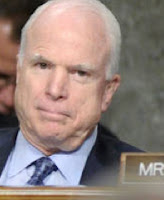
Listening to Hagel's confirmation hearing, certainly his questioning by Republicans, one might have thought that support for Israel was the principal job of a US Defense Secretary.  Leaving aside that the kind of support envisioned by these interrogators had a neo-Con, and in some cases an evangelical tilt, as an American Jew I found it perplexing.  But that was really an aside because the tone of the hearing had the unmistakable echo of ones conducted by the late Senator Joseph McCarthy.  The "Jewish lobby" and support of Israel came off as convenient rhetorical tools in carrying out their clearly coordinated agenda.  And the tone of the questions, perhaps none more than those posed by John McCain — just answer yes or no — brought me back to the 1950s.

It seems that Republicans have decided that McCarthy like smearing of a candidate is the way to go.  They started with Susan Rice, whose appointment as Secretary of State was still born thanks to this kind of guilt by association.  She had no role in, or responsibility for, the ben Ghazi tragedy.   They held back on John Kerry (the onetime victim of swift boating) probably because they saw his senate seat as a potential win-back.  And Hagel is being tarred not for his views on Israel which are probably shared by many in the Jewish community, but because they view him as an apostate.   Independent thinkers are the last thing that today's Republicans want or will tolerate.  Expect the Hagel confirmation votes in committee and on the floor to be strictly along party lines.

McCain of course has very personal reasons to dislike Chuck Hagel.  A strong supporter of America's ill conceived war in Iraq, the Arizona senator felt betrayed when Hagel opposed the surge and turned against the conflict.  Worse was when, now out of office, he supported Obama in 2008.  McCain's opposition has nothing to do with Hagel's qualifications for Defense; it is purely political and mostly very personal.  It is yet another reason to be thankful than this angry old man never reached the White House.

What the Republicans robbed us of with their McCarthy-like questioning was any substantive discussion of Defense's role or what its priorities should be in the years ahead.   I don't mean that the hearing totally ignored its underlying purpose, but that substance was drowned out by the noise of distraction.  Oh, would old Joe have been proud.  Oh, should McCain and company be ashamed.

Wednesday, January 23, 2013

Worst fears.


Barack Obama delivered the most unambiguously liberal Inaugural speech in recent memory.  In his iconic 1961 inaugural, John F. Kennedy declared: "the torch has been passed to a new generation" — time had changed.  JFK also had a progressive agenda, but that speech was delivered in a Cold War context and included some serious saber rattling.  "Let every nation know, whether it wishes us well or ill, that we shall pay any price, bear any burden, meet any hardship, support any friend, oppose any foe to assure the survival and the success of liberty."  In contrast, Obama was speaking to a nation that has tired of military conflict and is happy its longest war is finally winding down.  Unlike Kennedy, he didn't have to tell us that the "torch had passed", that the clock had turned.  Obama embodies that message; he is the new America.  And that's precisely what seems so unsettling to Republicans.

As reported by Peter Baker in the Times, "Representative Pete Sessions of Texas, a member of the Republican leadership, said that from the opening prayer to the closing benediction, it was apparent our country’s in chaos and what our great president has brought us is upheaval. He added, we’re now managing America’s demise, not America’s great future.”  From opening prayer to the benediction, just think about that — an invocation by the widow of Medgar Evers, a vice presidential oath administered by the first Latina supreme court justice, the inaugural of an African American President, a poem written an recited by a gay man, a benediction by a Latino cleric.  Ah, now I understand.   Mr. Sessions has made it abundantly clear.  His words ring out like an echo of the post Civil War South.

Throughout President Obama's first term and into the election there have been clear signs that the ferocity of opposition he faced often had racial overtones.  Sessions' words seem consistent with that, but we should be careful about interpreting them in such a narrow and superficial way.  In fact, I don't think that race is what's bothering today's rightist controlled Republican Party.  If you really want to understand their issue, consider the Representative's last words, "we’re now managing America’s demise, not America’s great future".  Sure you can read that in economic or military terms, but that is to miss the point.  The America that is dying and whose future won't be what it was is a White Christian male dominated America.  It is that America which demographic studies show is slipping away.  It is the same America that lost to Obama in November.

Sessions may have problems with "the other".  He may resent that Obama gave a shout out to "Seneca Falls, and Selma, and Stonewall" and that he put so many Hispanics up front in the ceremonies.  I should note that, unlike 2009 the President gave no nod to what he called "nonbelievers" (I call them transcenders), who have grown another 25% in the four years since.  That will be the subject of my next post.  But what really concerns the Congressman is that the groups represented by these symbolic locations, along with a young generation of a very different and open mindset, are becoming the majority.  They are the America that is alive and who will be a different kind of great future.

What you'll hear from Republicans in the coming months is their unyielding concern about deficits and fiscal responsibility.   To some degree, that will reflect a not so backdoor assault on government itself.  But mostly I see it as a smokescreen covering up their number one anxiety.  They are losing their grip on a past that is fleeting away and have not yet figured out how to be part of this changed world.  To the contrary, they live in a dream world, the same one that convinced them a President Romney would have been addressing them on this week.  They think that passing state constitutional amendments against marriage equality, as they did here in North Carolina, will stop a powerful train that has long since left the station.  They think a denial of science can sustain against the hard evidence of climate change.  They see their Tea Party victories as the beginning of a trend rather than the last gasp of a sinking ship.

No one should underestimate the challenge facing specific legislation, immigration, tax reform, environment and most especially gun control.  There will be big battles over fiscal management and deficits, about Medicare and even Social Security.  Republicans will have some victories, Democrats some setbacks.  The liberal ideology expressed in the Inaugural of 2013 is still aspirational and not universally shared.  But the clock is ticking and the past will be just that.  This is not the first time that battle lines have been drawn between those who want to retain what was and those who want to embrace what will be and already is.  Metaphorical blood may be shed in the battle, but the ultimate outcome isn't in question.

_____________________
I call them Transcenders.  To brand them nonbelievers is to assume religion and its particular belief system the human default.  Worse it suggests that those who have left religion behind lack beliefs.  Nothing could be further from the truth.  My book is now available in print at Amazon and as in e-book form at Kindle, Nook and iBooks.

Monday, January 21, 2013

Let us reason together.

-->
Lyndon Johnson was fond of quoting the prophet Isaiah (1:18), "Come let us reason together".  I've been thinking about that on this Inauguration Day as Barack Obama launches his second term.  Johnson, the consummate consensus politician, was a master negotiator whose success came in part from knowing when and where to strike.  Most notably, he leveraged Jack Kennedy's assassination to gain passage of landmark civil rights legislation.  He was also a tough horse trader who would literally hold a legislator by the lapels and not let go until his offer — perhaps some earmark in exchange for a vote — had been accepted. His skills as president-negotiator were of course honed during years as Senate majority leader and before that in being schooled by his mentor and fellow Texan, Speaker Sam Rayburn.

Critics complain that Barack Obama is not a good negotiator.  You might think that can be attributed to a political resume that, in contrast to Johnson, is to say the least anemic.  But I think it's more the case that Johnson's 1960s approach wouldn't and doesn't work at this moment.  Reason is simply out of sync with an unreasonable time.  And unreasonable is just what we are facing in the second decade of this century.  Let us reason together requires a two-sided commitment to consensus and that surely is lacking in the polarized atmosphere that pervades both Washington and the country.  We are a nation divided, one in which adhering to narrow ideology is given far greater currency than compromise.  There seems to be no middle ground, except the mythical one claimed to exist among the electorate at large.

Robert Caro has devoted nearly thirty years to LBJ, but I certainly don't look back on the Johnson years or at him with any nostalgia.  To me, he was a tragic figure who drove us into a state of collective schizophrenia.  We half loved him for his social legislation and ability to reason together and we half hated him for escalating a war that profoundly damaged his own country, perhaps more than its adversary.  Indeed, I would submit, that the bitter ideological divide that pervades today has its roots in the Johnson years.  Not only did Viet Nam divide the country, it birthed an environment of either/or caricatures: hawks and doves, capitalists and socialists, red and blue.  We have become a nation of one-dimensional labels that we simplistically and thus inaccurately apply to others and also to ourselves.  It's a very broad brush that paints the narrowest of strokes.

The inauguration was held on Martin Luther King Day and in the same month that Abraham Lincoln signed the Emancipation Proclamation 150 years ago — full of symbolism.  It was held just a stone's throw from where, 50 years ago, King and others including my own father spoke of the better world that the President evoked and embodied today.  Lincoln's time was also divisive, in fact the most divisive in our history.  618,222 Americans (North and South) lost their lives and over one million were wounded.  And for sure one thinks of Lincoln's Second Inaugural, probably the greatest, and his supreme effort to bring the nation together, to reason if you will together.  It was a deeply religious speech, sermonic in language and tone.  Every school child, certainly in my day, committed its peroration to memory:
With malice toward none, with charity for all, with firmness in the right as God gives us to see the right, let us strive on to finish the work we are in, to bind up the nation's wounds, to care for him who shall have borne the battle and for his widow and his orphan, to do all which may achieve and cherish a just and lasting peace among ourselves and with all nations.
It is remarkable how timeless those words remain.

I thought of Lincoln today and of the speech, but more so how times do change.  Just as Johnson's invocation of reasoning together seems so out of sync with our time, Lincoln could never have obtained the Republican nomination in 2012.  In fact, he would have been more likely to win the Democratic one.  How the tables have turned upside down.  Today it is the Democrats who are really the party of Lincoln and Obama's Second Inaugural evoked just that spirit.  One broadcast commentator characterized it as a civil rights speech.  Lincoln's America was much smaller and less complex than Obama's, Martin King's civil rights much more, though not exclusively, focused on fulfilling the Emancipation dream.  Obama spoke to women, gays, immigrants and Hispanics, people who in many ways have been treated as what Michael Harrington called "The Other America".  Harrington was talking of the poor, but all of these have been, if not totally disenfranchised, then certainly "under franchised".

As both our leader and the father of Malia and Sasha Obama declared:
We are true to our creed, when a little girl born into the bleakest poverty knows that she has the same chance to succeed as anybody else, because she is an American, she is free, and she is equal, not just in the eyes of God but also in our own. 
Perhaps most significantly, because it was the first time any president had incorporated such words in his inaugural, he said:
Our journey is not complete until our gay brothers and sisters are treated like anyone else under the law – for if we are truly created equal, then surely the love we commit to one another must be equal as well. 
Obama himself has come a long way in these past four years.  It was also in this portion of the speech that he gave a clear signal to what will undoubtedly be a primary legislative agenda in the months to come:
Our journey is not complete until we find a better way to welcome the striving, hopeful immigrants who still see America as a land of opportunity; until bright young students and engineers are enlisted in our workforce rather than expelled from our country.
As to Hispanics, rather than rely only on words, the President invited Richard Blanco whose family fled here from Cuba, to write and deliver the inaugural poem, much as Robert Frost had done for Kennedy in 1961.

Obama's speech had its references to the campaign, for example, when he pointedly said, Medicare, and Medicaid, and Social Security...do not make us a nation of takers.  In the same vein, he touched on climate change and the need to respond.  Some may still deny, he said pointedly, the overwhelming judgment of science, but none can avoid the devastating impact of raging fires, and crippling drought, and more powerful storms.  One commentator suggested that this was more like a State of the Union than an inauguration speech. Bob Schieffer of CBS complained that it had no great quotable line, no ask not what America can do for you, ask what you can do... Perhaps, but read it through and you'll find enough soaring rhetoric, perhaps not a Second like Lincoln's, but right for its time, our time.

Come let us reason together, how quaint, how yesterday.  The problem is that we have rarely needed to reason together more than now.  Lyndon Johnson understood that getting things through Congress required both leadership and the ability to compromise.  They call that the democratic way.  I don't know if President Obama will have greater success in doing that in the four years ahead than he has in the past.   Again, Johnson's times and ours are very different.  But if I hoped for anything as the quadrennial ceremony of inauguration took place today, it was that we can reason together.  There is much to do, so many real problems to solve.  Reasoning together might well be our best hope.

_____________________
I call them Transcenders.  To brand them nonbelievers is to assume religion and its particular belief system the human default.  Worse it suggests that those who have left religion behind lack beliefs.  Nothing could be further from the truth.  My book is now available in print at Amazon and as in e-book form at Kindle, Nook and iBooks.